

Reducing wastage of food
Why it is so Important to Reduce Food Waste?
When we waste food, we also waste all the energy and water it takes to grow, harvest,
transport, and package. By reducing our waste, we are conserving our limited natural
resources. By taking steps to reduce our energy intake, we contribute to a healthier and happier
world. Waste reduction plans do not need to be costly or time-consuming to practice. Below
are few simple ways to practice …
1. Avoid over-ordering provisions.
Ensure that you only order the items that you need (60 days of dry and frozen items and 30 days of fresh vegetables and fruits). It can be tempting to ‘stock up’ if you are in an economical port, but over-stocking can leave you with more food than you need. This food will only go to waste if it is left to spoil in galley storerooms.
2. Store food correctly.
Make sure that your vegetable store and deep freezers are running at the right temperatures. Ensure that low-risk foods are always stored on higher shelves than high-risk foods, and keep food storage areas clean and tidy. Storing food under the correct conditions is very important for preserving its quality and preventing harmful bacterial growth—both of which can quickly lead to food spoilage (waste).
3. Practise stock rotation regularly.
Use the ‘FIFO’ rule – First In, First Out – when storing food (items with no expiry date). This ensures that newer stock is routinely placed behind older stock, and the older stock will always be used first before it gets spoiled. For items with an expiry date, use the ‘FEFO’ rule – First Expiry, First Out. Store items based on their expiry date to ensure they are used in time.
4. Temperature control.
Good temperature control is essential for food safety as it prevents the growth of harmful pathogenic bacteria. It also reduces food waste by keeping food fresh. This includes cooling hot food quickly, reheating food to the correct core temperature (at least 70°C for 2 minutes), storing high-risk food in refrigerators (1–4°C) and freezers (below -18°C), and maintaining safe hot and cold holding temperatures (above 63°C for buffet counters and below 8°C, respectively).
5. Label food correctly.
If food is decanted into different containers for storage, ensure that each container is clearly labelled with the packing date, expiry date, and product details. Keeping stock organised makes it much easier to track what you have and what needs to be used soon, preventing unlabelled containers from being discarded by mistake or because their contents are unknown.
6. Keep a stock inventory.
To prevent waste, you should always know exactly which items you have in stock. Keep a detailed list of all items in the storerooms, including their expiry or best-before dates, for easy reference. This helps prevent food from being forgotten and going to waste.
7. Inspect all deliveries against the order specification.
When a provisions delivery arrives at your vessel, ensure that you only accept the items you have ordered to prevent excess stock. Reject anything with visible spoilage, damaged packaging, or items delivered at an incorrect storage temperature, as these foods are likely to spoil further and eventually be condemned.
8. Anticipate the demand with care.
Calculate and plan how much food you need to prepare for the crew. Consider whether some items can be prepared to order instead (e.g., eggs, rotis, dosa). While bulk cooking may save time, it can waste both food and money if it is not properly planned or consumed in time.
9. Incorporate leftovers and use food efficiently.
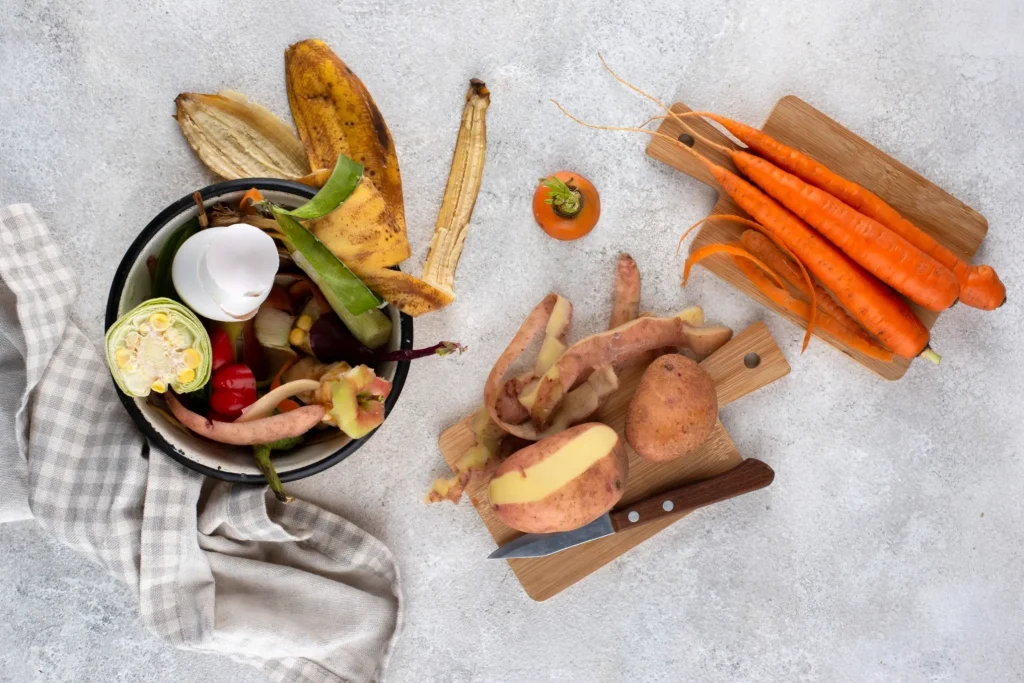
Avoid throwing away leftover food too quickly, as it may be used elsewhere. For example, vegetable peelings and animal bones can be used to make stocks and soups, while day-old bread can be turned into croutons or breadcrumbs.
Ensure that you only order the items that you need (60 days of dry and frozen items and 30 days of fresh vegetables and fruits). It can be tempting to ‘stock up’ if you are in an economical port, but over-stocking can leave you with more food than you need. This food will only go to waste if it is left to spoil in galley storerooms.
2. Store food correctly.
Make sure that your vegetable store and deep freezers are running at the right temperatures. Ensure that low-risk foods are always stored on higher shelves than high-risk foods, and keep food storage areas clean and tidy. Storing food under the correct conditions is very important for preserving its quality and preventing harmful bacterial growth—both of which can quickly lead to food spoilage (waste).
3. Practise stock rotation regularly.
Use the ‘FIFO’ rule – First In, First Out – when storing food (items with no expiry date). This ensures that newer stock is routinely placed behind older stock, and the older stock will always be used first before it gets spoiled. For items with an expiry date, use the ‘FEFO’ rule – First Expiry, First Out. Store items based on their expiry date to ensure they are used in time.
4. Temperature control.
Good temperature control is essential for food safety as it prevents the growth of harmful pathogenic bacteria. It also reduces food waste by keeping food fresh. This includes cooling hot food quickly, reheating food to the correct core temperature (at least 70°C for 2 minutes), storing high-risk food in refrigerators (1–4°C) and freezers (below -18°C), and maintaining safe hot and cold holding temperatures (above 63°C for buffet counters and below 8°C, respectively).
5. Label food correctly.
If food is decanted into different containers for storage, ensure that each container is clearly labelled with the packing date, expiry date, and product details. Keeping stock organised makes it much easier to track what you have and what needs to be used soon, preventing unlabelled containers from being discarded by mistake or because their contents are unknown.
6. Keep a stock inventory.
To prevent waste, you should always know exactly which items you have in stock. Keep a detailed list of all items in the storerooms, including their expiry or best-before dates, for easy reference. This helps prevent food from being forgotten and going to waste.
7. Inspect all deliveries against the order specification.
When a provisions delivery arrives at your vessel, ensure that you only accept the items you have ordered to prevent excess stock. Reject anything with visible spoilage, damaged packaging, or items delivered at an incorrect storage temperature, as these foods are likely to spoil further and eventually be condemned.
8. Anticipate the demand with care.
Calculate and plan how much food you need to prepare for the crew. Consider whether some items can be prepared to order instead (e.g., eggs, rotis, dosa). While bulk cooking may save time, it can waste both food and money if it is not properly planned or consumed in time.
9. Incorporate leftovers and use food efficiently.
Avoid throwing away leftover food too quickly, as it may be used elsewhere. For example, vegetable peelings and animal bones can be used to make stocks and soups, while day-old bread can be turned into croutons or breadcrumbs.